















How many times have you seen a helpless princess be rescued, the caring mother figure showing up just when she’s needed or close-up shots of a female character’s breasts or butt on your television? Historically, women have been stereotyped as sex objects, damsels in distress, caregivers or “madwomen” villains in movies or television. For women of color specifically, the Mammy stereotype, where a woman of color is an obedient servant, is one that impacts the roles they’re cast in. For example, Octavia Spencer, a prominent black actress, has been cast as either a maid, nurse or cleaner 21 times during her career (BBC). For transgender women, they’re commonly portrayed as villains more often than cisgender women. One instance of this vilification is in the slasher film “Sleepaway Camp” (1983) where the killer is revealed to be a transgender woman. This portrayal is likely because being transgender was associated with shame and deception in the 1980s and 90s. A study by the Gay & Lesbian Alliance Against Defamation, now known as GLAAD, found in 2012 that in the 102 television episodes featuring a transgender woman she was a villain 21% of the time. Depictions of transgender women as killers and other villains is harmful because it portrays them as people who should be feared. Furthermore, for women as a whole, according to the Geena Davis Institute in 2004, only 11% of family films had female leads. In 2009, the University of Southern California (USC Annenberg) found that only 32.8% of 4,342 speaking characters were women. The same study by USC Annenberg found that 33.8% of female teenage characters in movies wore sexual clothing, and 28.2% of those teenage characters had an exposed cleavage, midriff or upper thigh. In contrast, male teenage characters were only shown in sexual clothing 5.3% of the time. Similarly, in family films, black women were found to be 4.5% more sexualized than white women. This is likely due to the racist Jezebel stereotype, created around the same time as the Mammy stereotype, where women of color are portrayed as overly lustful.

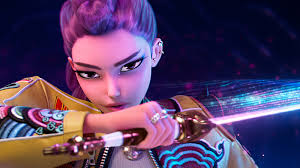
With all this considered, it’s important to acknowledge that movies and television are forms of media that thousands, if not millions, of people consume. Therefore, when women are pushed to the side, villainized or sexualized in movies and television, those ideals are consumed by a wide audience who can have their views on women influenced. In response, women have criticized their portrayal in film and television to advocate for better representation. This has been successful as newer movies have worked to show more female protagonists, and women in general, in more meaningful roles. Elphaba Thropp from “Wicked” (2024), Rumi from “KPop Demon Hunters” (2025) and Furiosa from “Furiosa: A Mad Max Saga” (2024) are all examples of female protagonists. In order to get more opinions on how women are represented in modern day, several people at Tuscarora High School (THS) were interviewed. One THS senior said, “I feel like they’ve come a long way from where they came from. Women used to be just reduced to romantic interests and that kind of thing.” THS teacher Ms. Reed added her own opinion, “[…]the definition of what a modern female character is is good, if we stay stagnant that’s bad. All humans should be represented.” An anonymous teacher added on saying, “…often back in the sixties and seventies women were portrayed as housewives and moms as their sole role. Now, we’re seeing much more women of strength in movies and [television].” This anonymous teacher gave the example of Téa Leoni as Elizabeth McCord in the show “Madam Secretary” (2014-2019) as an example of a well-portrayed female lead.
On the other hand, while modern representation has been positive for the most part, the aforementioned anonymous senior described that many female characters don’t feel as “fleshed out” compared to male characters. This student elaborated by describing how female characters don’t have the same depth to their struggles and flaws as male characters do. Similarly, THS teacher Ms. Mora said that she feels like, “a lot of the movies that have come out recently have been very adventure [based] and less realistic.” Personally, I believe that while the portrayal of women in movies and television has come a long way, there is still much to be done to write realistic female characters. Modern movie producers, in an attempt to avoid the damsel in distress stereotype, have been making overly-tough and powerful women in their movies. Many times when I watch something with a female protagonist, they always seem to be action heroes with very few real flaws. In my opinion, it seems like many female characters, especially protagonists, are too focused on being strong that they’ve begun to feel unnatural. To fix this, movies and television should try to tell stories about female characters in other genres than action or adventure like Ms. Mora described. Not every female character has to be tough or sassy. Female characters can be written as humorous, compassionate, inexperienced or any other personality type.
At this time, the unrealistic portrayal of female characters is likely due to men being the main ones to control how women are portrayed on-screen. Reports have highlighted a lack of female directors in Hollywood; according to The Story Exchange, a women-focused media platform, female directors were only involved in 16% of the 250 top-grossing films of 2024. Alongside this, women only accounted for 20% of the writers on those 250 films. In order for women to be more fairly shown on screen, more female personnel are needed behind the scenes. Instead of this, critics might argue that we should educate men on how to better write about women in movies and television through seminars led by women. While this is true and should be implemented, the fact still remains that women are guaranteed to write realistic characters because they’re the ones who best know the struggles and experiences women go through. By allowing women, especially women of color and transgender women, to choose how to depict their gender on-screen, women will be able to be shown on-screen in realistic, complex ways. Although this wouldn’t solve the entire problem, another solution could be creating laws or requirements for how women should be shown sexually on screen. Women being portrayed as sex objects is one of the major stereotypes, and the way teenage girls, sometimes under the age of 18, are shown in revealing clothing is concerning. The idea that women mainly exist to sexually satisfy others contributes to misogynistic ideas as well. In other words, to address the issue of misrepresenting women in movies and television, producers should invest in more female directors and hire additional female writers, have seminars where men can learn about the experiences of women and put requirements on how women should be portrayed to prevent the spread of negative stereotypes.
Works Cited
USC Annenberg study: Hollywood hooked on sexualizing women and teen girls
https://www.jsr.org/hs/index.php/path/article/view/6762/3132
The Jezebel Stereotype – Anti-black Imagery – Jim Crow Museum
Women Are (Still) Underrepresented in Hollywood, New Data Reveals
From mammy to Ma: Hollywood’s favourite racist stereotype
The Lies You Tell: Disrupting the Dominant Depiction of Black Women in Film