












Systemic racism—discrimination embedded in laws, policies and institutions—remains widespread in the United States, presenting a disadvantage to people of color while upholding white advantage, experts and data indicate. It has established beliefs and attitudes that produce, condone and perpetuate widespread unfair treatment of people of color (Health Affairs). Rooted in the Constitution’s 1789 three-fifths compromise (article one, section two) that counted enslaved people as three-fifths of a person for representation. Systemic racism continued through 250 years of slavery, a century of Jim Crow laws and ongoing disparities (Ebsco). These are examples of policies, although not practiced anymore, that began the systemic issues and continuation of rooting racism into the United States.
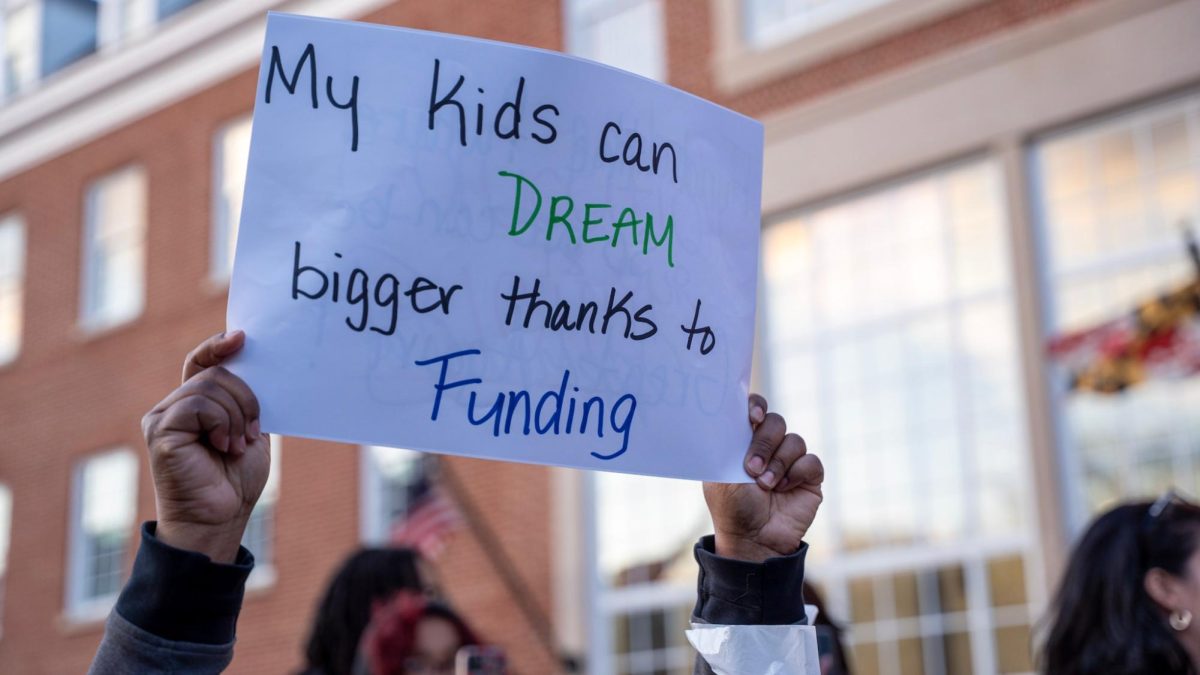
For years, there have been exclusionary tactics to prevent African American men and women from building wealth, affording homes and so many other examples (American Progress). This included the right to vote, work and get an education. Predominantly black school districts receive around $23 billion less in funding than their counterparts of white prominent school districts, according to a 2019 EdBuild report (Robert Smith). Another issue that keeps black people down is police brutality and the prison system. According to 2020 data from the American Bar Association, while Black Americans make up 13% of the U.S. population, they represent 22% of fatal police shootings, 47% of wrongful convictions and 35% of individuals executed by the death penalty. This is compared to the 40% of white people that are killed by police and the 29.9% that make up incarcerated individuals. It shows that despite making up approximately 13% of the U.S population, black people are arrested and killed at a significantly higher rate than their white counterparts.
Additionally, it is seen that there is a lot of prevalence in other issues currently. For example, the housing crisis, the poverty rates and the lack of house ownership among people of color. In Washington D.C, there was a prominent decline from 71% to just 48% of the city’s population of Black residents. There had been a huge rate of gentrification, the process of moving wealthier people into historically lower-income housing, causing more than 20,000 African American residents’ to be displaced. As seen, one in four black Washington residents—approximately 23 percent—live in poverty (American Progress). This is compared to the 9.5% of white people that are in poverty, showing another discrepancy. In 1973, the Justice Department sued Donald Trump and his father, Fred Trump, alleging they refused to rent apartments to Black tenants in buildings they owned. The case was settled without an admission of guilt, but court testimony showed applications from Black prospective tenants were marked with a “C” for “colored,” according to Associated Press reporting at the time (clearing house), showing how even the leader of the United States has shown racist ideology.
There are many people that agree to the issues that are being presented. For example, in an article Ohchr published, “We reject the “bad apple” theory. There is strong evidence suggesting that the abusive behaviour of some individual police officers is part of a broader and menacing pattern,” said Juan Mendez, an expert member of the Mechanism. “Law enforcement and criminal justice institutions in the United States share and reproduce values, attitudes and stereotypes of US society and institutions. These must be reformed.” The “bad apple” theory refers to the idea that they are a low-performing individual that significantly harms the team or population. He presents support for many points that show that structural issues continue to keep up stereotypes and societal issues that still exist today that were created from long ago. In another interview on Dec. 5th, an anonymous student states, “…A lot of the time when I shop, they watch me as if I’d steal something. I don’t get it. I think it’s just the systematic and structural issues in society, they have learned these behaviors. History definitely plays a part in it too.” Another student, on a Dec. 6th interview, stated that, “I hear people calling others racist words a lot, slurs they can not reclaim. I think this definitely plays into racist ideology.” This is simply another example of how systemic issues are ignored, as people ignore the weight of their words. Many people share this sentiment and it just shows just how bad the system is. I believe that systemic racism and structural issues definitely do still exist today. This is definitely seen in an interview from Dec. 7th, where a man named Zach recounted his time in the military. “People were not that accepting, using their own ignorance to support their racist ideologies and refusing to be accepting or respectful towards me.”
Many solutions can be given to solve these issues, such as reform and moving away from the dated systems that were historically put in place to keep black men and women down. So many solutions can get rid of the systemic issues that keep so black men and women under other races. The gentrification of historically black areas can be eliminated. Reform to the police departments and prison system can be made to stop the unfair treatment, destruction and death it causes. They need to be reformed and more inclusive among those who have been the backbone of society, yet they continue to deal with discrimination and structural issues that keep them down rather than supporting them.